Deutsch
SDC-Workstation
Research Projekt
MediNET
Services
UX / UI
Interdisciplinary Process Optimization in the Operating Room and Hospital
Patients visit the hospital to receive medical care. When procedures are scheduled, they expect the best possible surgical outcome. This depends, among other things, on a fully comprehensive, vendor-neutral network of medical devices within the hospital. The interests of users—such as the surgeon—and the interests of patients are complementary. Open, networked central workstations are designed to prevent errors in the operating room related to device operation and documentation, and to achieve improved process quality with high-quality surgical outcomes.
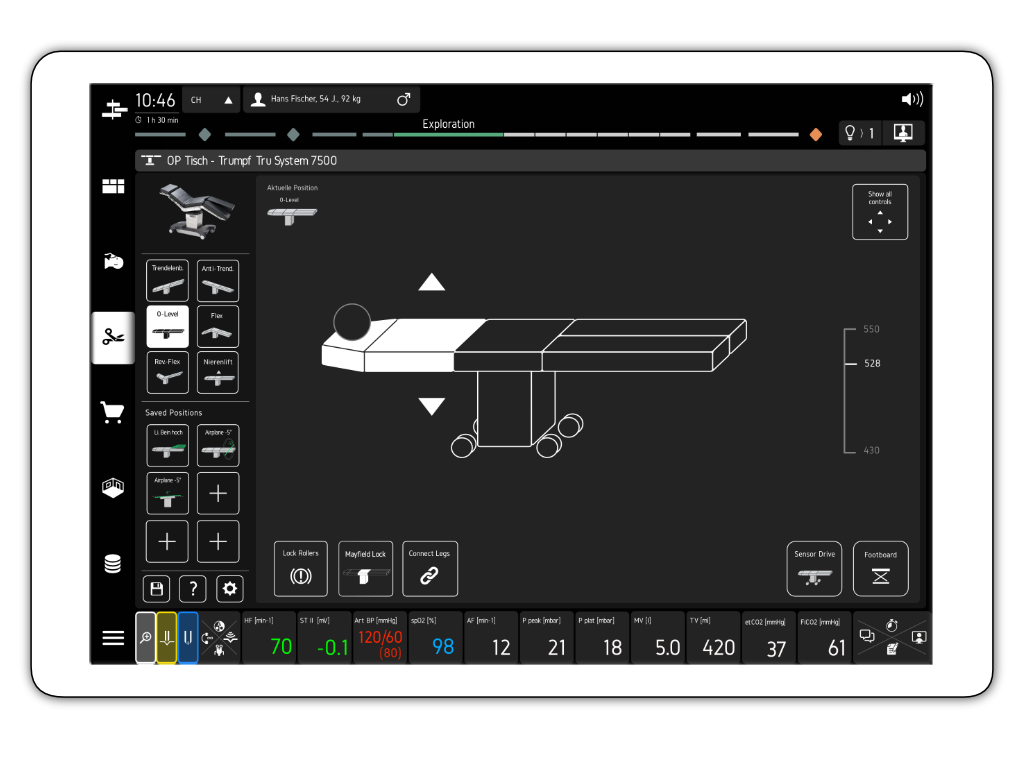
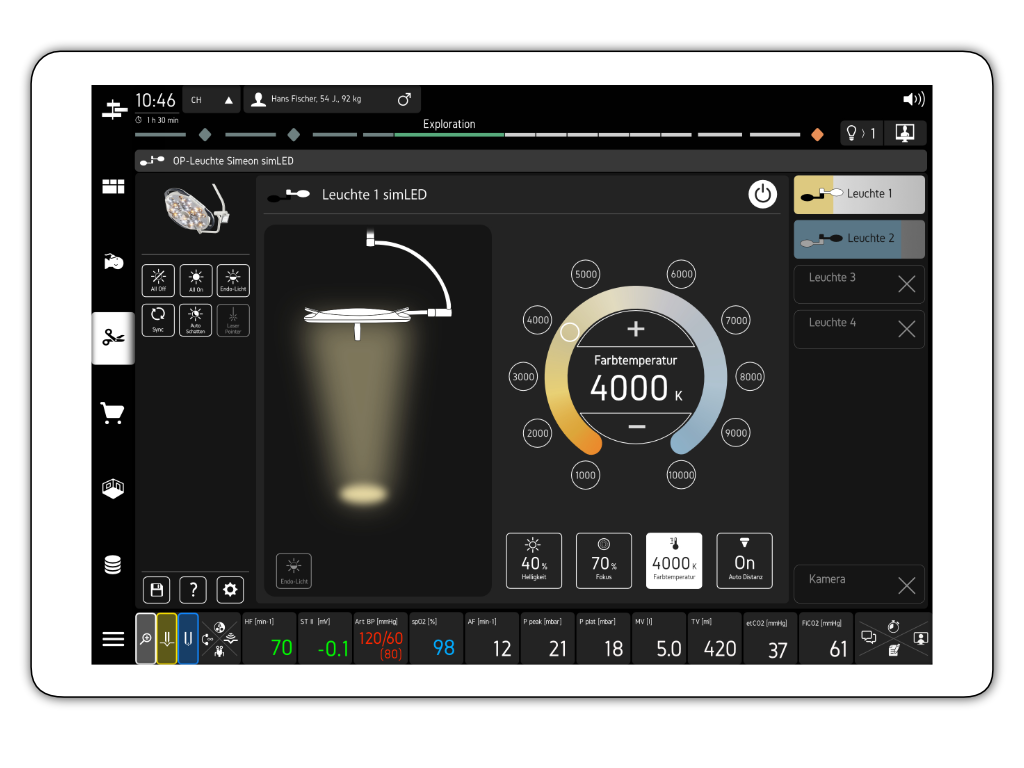
Interoperability not only enables communication between devices, but also the collection of all context-related data at any time and in any location. This makes it possible to implement “workstations” for surgery and anesthesia that display all necessary information and data in a centralized location and enable device interactions through a unified user interface.
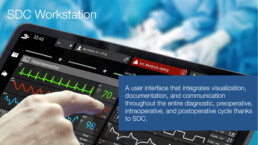
Standardized operating concepts ensure high usability and safe operation of devices from different manufacturers. Instead of up to 10 foot switches—as is common today in neurosurgery—only one universal foot control unit will be needed in the future.

About MediNET
The digital transformation in healthcare offers significant opportunities to improve the quality of care in operating rooms and hospitals. The number of medical devices in operating rooms and adjacent departments—such as recovery rooms and intensive care units—is steadily increasing; today, up to 40 different medical devices from various manufacturers are already in use in each operating room. These standalone solutions prevent comprehensive data exchange and standardized device operation. Against this backdrop, the open and vendor-neutral networking of medical devices in accordance with the new ISO IEEE 11073 SDC (Service-oriented Device Connectivity) standard represents a promising solution. This technology has the potential to revolutionize the healthcare market by leveraging synergies and significantly reducing the workload. Interconnectivity leads to data fusion, automated documentation, and standardized user interfaces, thereby improving clinical workflows.
These advantages support and relieve the burden on staff, while also offering improved treatment options combined with enhanced patient safety—which, in turn, leads to better clinical outcomes. In addition to cost savings, this approach specifically addresses the challenges posed by the increasing staff shortage and the growing documentation burden in clinical departments.
Imagine that all devices in the operating room work together like an orchestra. The conductor (surgeon/anesthesiologist) orchestrates surgical lights and tables, endoscopy devices, X-ray and ultrasound machines, as well as ventilators, patient monitors, and infusion pumps via a central SDC workstation. If proprietary devices can be integrated into a single “orchestra” via SDC using plug-and-play technology, this yields significant benefits for hospitals, users, and ultimately for the patient.
Uniform operating concepts ensure high usability and safe operation of devices from different manufacturers. Instead of up to 10 foot switches, as is common today in neurosurgery, only a single universal foot control unit will be required in the future. This means simplified operation from within the sterile field and an end to “yell-and-click” communication, which was previously necessary between sterile and non-sterile staff—such as when adjusting the operating table (Quote: Prof. Clusmann, Chief of Neurosurgery at Aachen University Hospital: “If you need to adjust the operating table during surgery, you call the non-sterile assistant … and wait … and wait … which can lead to critical delays.”) Another example is the optimization of interdisciplinary workflows. Both patient data (e.g., collected at an accident scene) and preset parameters for medical devices can be transmitted to the emergency room in advance and are already available on the on-site equipment when the patient arrives.
Currently, up to 55% of surgeons’ and anesthesiologists’ working time is spent on documentation (HIMSS (2015)). An SDC platform enables semi-automated documentation across specialties and hospital departments. This, in turn, frees up additional capacity for patient care.
Until now, hospital operators have typically been tied to individual manufacturers for years. With SDC, users can now deploy the latest technology as needed. The time required for onboarding or training is reduced thanks to standardized operating concepts, and intelligent workflow support significantly improves clinical outcomes.