Deutsch
X-Workstation
Research Project
PriMed
Services
UX / UI
User Interface Design for a SMART Operating Room
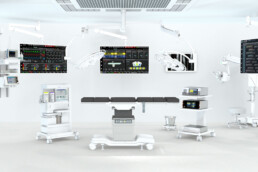
The Surgical X-Workstation 4.0 enables, for the first time, intelligent, cross-vendor networking of medical technology in the operating room. However, the networking of various components in the operating room poses new challenges for the design and usability of the central technology management interface. The user interface not only integrates all medical devices in the operating room but also facilitates secure and user-centered human-machine interaction in the operating room. This enhances patient safety.
Our central workstation for integrating and controlling all medical devices in the operating room impressed the jury of the iF DESIGN AWARD in the “User Interface Concepts” category.

Customization
All devices can be viewed and operated individually, or groups can be formed as needed. These functional groups can be assembled and customized as part of a modular system, tailored to specific operational requirements or user preferences.
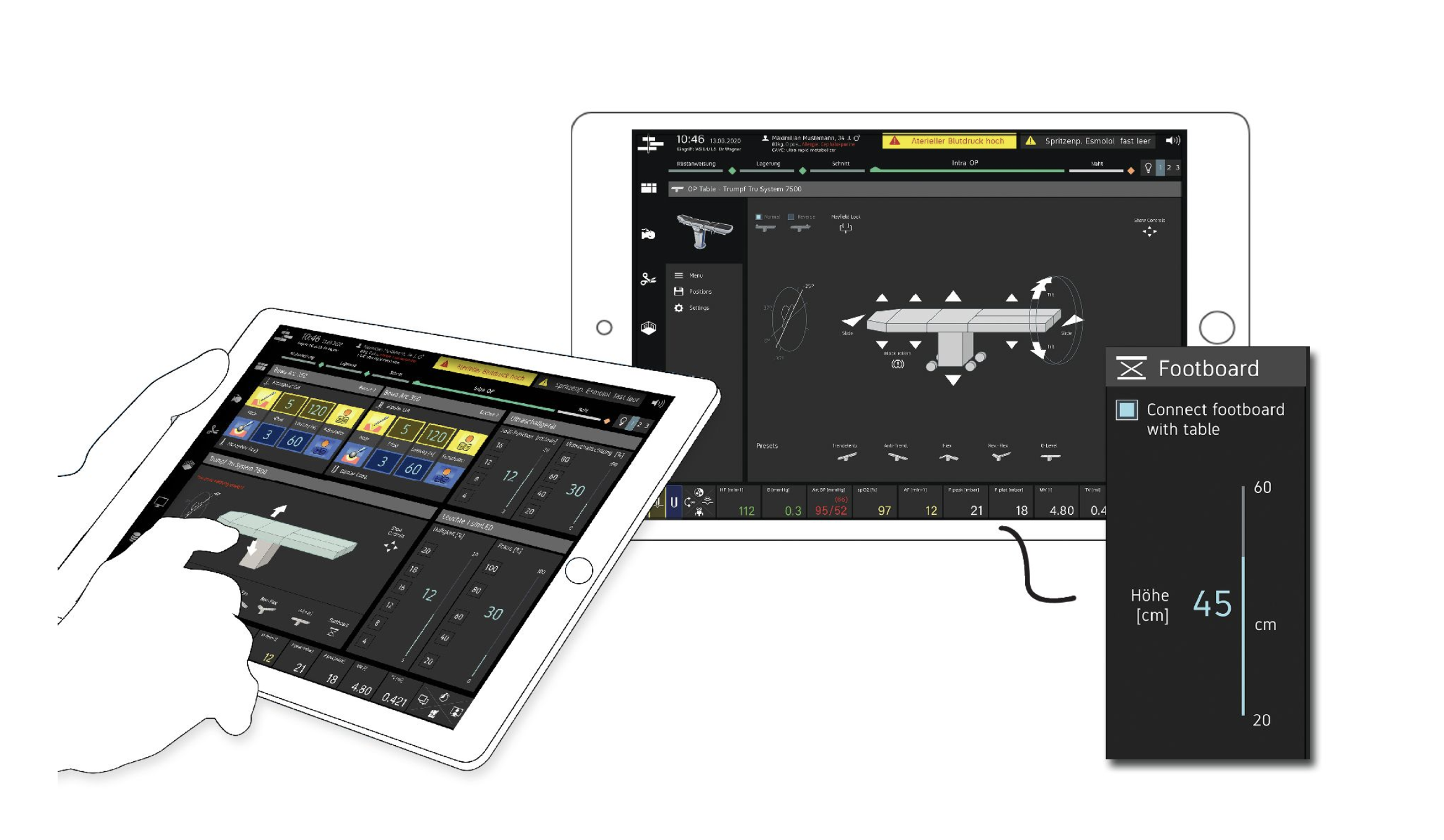
Modular Design
In modern operating rooms, various medical devices are controlled by a single unit—our Surgical X-Workstation 4.0. The workstation serves as the hub connecting all devices.
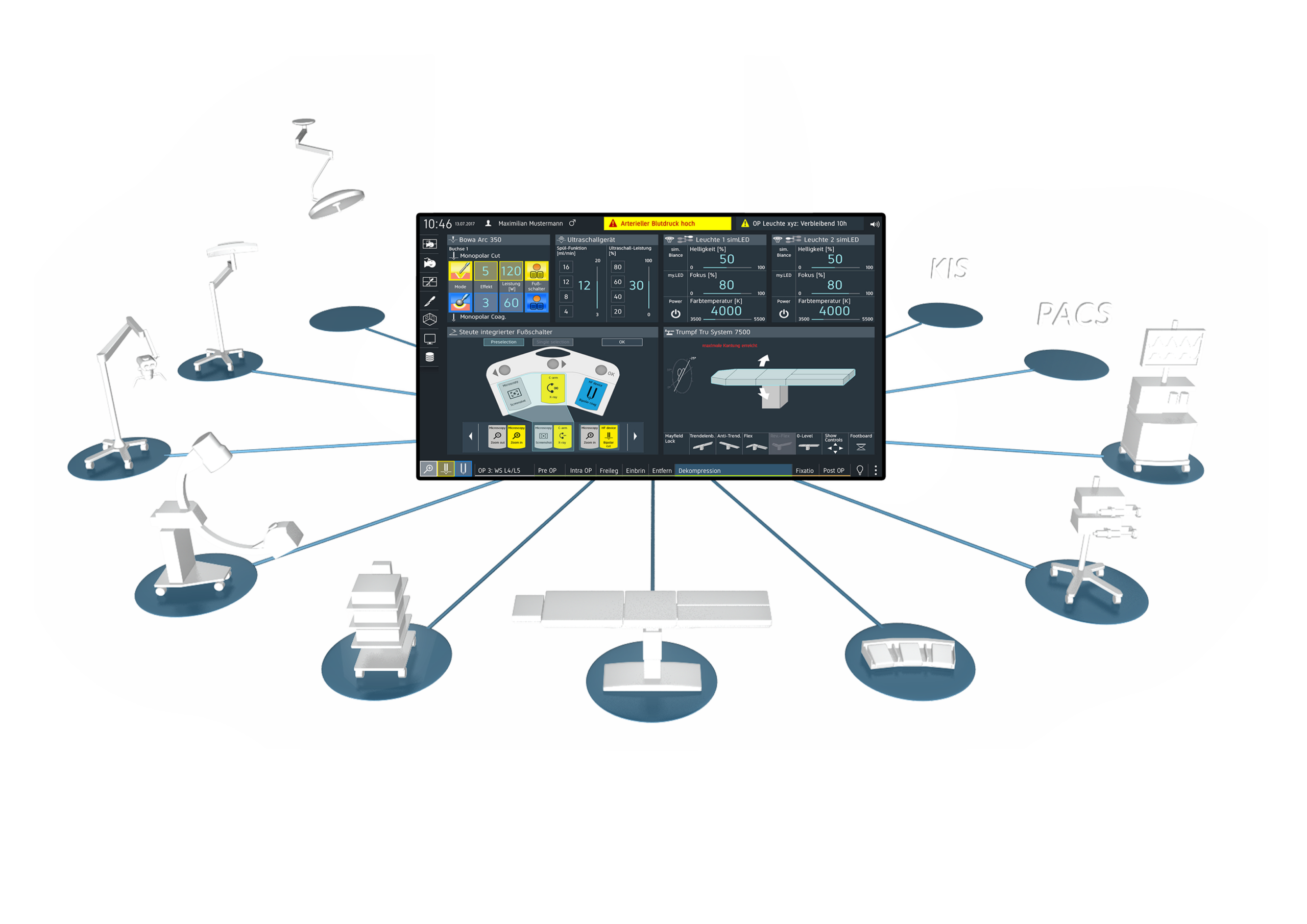
Optimized Workflow
- Direct access via the central control system
- Improved collaboration through optimization of the OR workflow
- Safe operation
- Effective and efficient control in the OR
- Sterile working conditions for the surgeon
- Integration of WHO checklists

Innovation
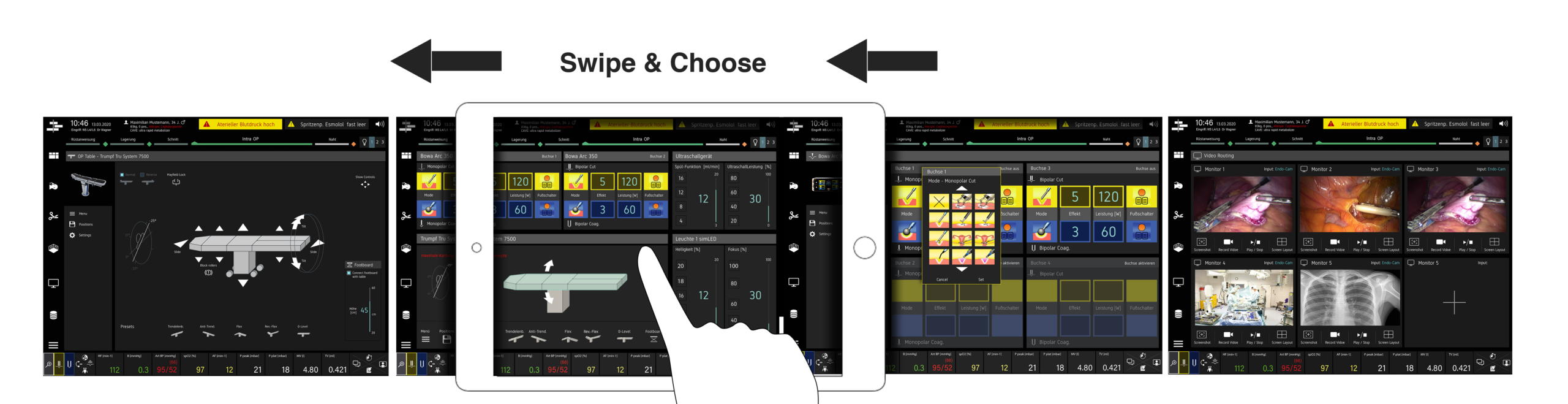
This is reflected in a consistent, user-friendly, and process-supporting user interface that draws on familiar operating patterns from smartphones and tablets. Users can quickly switch between individual device views and individual function group views.
Process-Integrated Medical Technology in Operating Rooms and Hospitals 4.0
The objectives of the PriMed project in the precompetitive phase of medical technology research and development are to develop fundamental concepts and conduct initial feasibility studies for measures to optimize perioperative processes in line with the “Hospital 4.0” vision. The information and data already being collected today—for example, from surgery and anesthesia—must be processed in the future using knowledge-based expert systems.